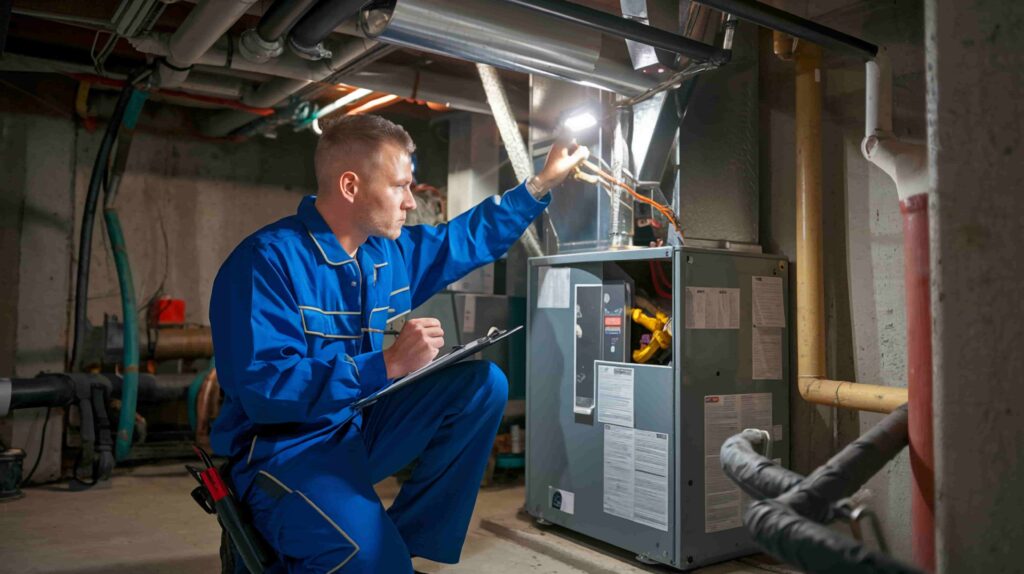
Discovering your furnace not working during freezing winter temperatures creates an urgent situation for any homeowner. When your heating system fails, understanding why your furnace is not working and knowing which steps to take immediately can prevent frozen pipes, keep your family safe, and help you determine whether you need emergency HVAC service or can resolve the issue yourself.
Immediate Steps When Your Furnace Not Working
Before you start panicking, check these simple solutions that homeowners often overlook.
Check Your Thermostat First
Thermostat issues account for many furnace not working calls that don’t actually involve furnace problems. Verify that your thermostat is set to “HEAT” mode and that the temperature setting exceeds your current room temperature by at least five degrees.
Also check:
- Thermostat display is active
- Programming schedule hasn’t switched to a lower temperature
- Circuit breaker for the thermostat hasn’t tripped
- Thermostat location isn’t affected by drafts or direct sunlight
Inspect Your Circuit Breakers and Power Switch
A furnace not working might simply lack power. Check your electrical panel for tripped breakers. Furnaces typically have two breakers: one at the main panel and one near the unit itself.
Look for the emergency shutoff switch near your furnace. This switch resembles a light switch and can be accidentally turned off during cleaning or storage activities.
Common Reasons for a Furnace Not Working
Understanding what causes heating system failures helps you communicate effectively with HVAC professionals and prevents future problems.
Clogged Air Filter Issues
According to Energy Star, a dirty filter is one of the most common causes of furnace problems. When airflow becomes restricted, the heat exchanger overheats and triggers safety shutoffs, leaving you with a furnace not working properly.
Replace filters monthly during heavy use periods to maintain system efficiency and prevent breakdowns.
Pilot Light and Ignition Failures
Gas furnaces rely on pilot lights or electronic ignition systems. A furnace not working due to pilot light problems often indicates a faulty thermocouple or dirty pilot assembly requiring professional cleaning or replacement.
Flame Sensor Problems
Modern furnaces use flame sensors to detect whether burners ignite properly. A dirty or faulty flame sensor shuts down the heating cycle as a safety measure, resulting in a furnace not working even though all other components function correctly.
Safety Concerns with a Furnace Not Working
Never ignore certain warning signs such as:
- Strong gas odor (evacuate immediately and call your gas company)
- Carbon monoxide detector alarming
- Excessive condensation on windows
- Soot buildup around the furnace
- Yellow or flickering pilot light flames
These indicators suggest serious safety hazards requiring immediate professional attention.
Temporary Solutions While Awaiting Repair
If you’re dealing with a furnace not working and waiting for professional service:
- Use space heaters safely (never unattended or near flammable materials)
- Keep cabinet doors open under sinks to prevent pipe freezing
- Let faucets drip slightly in extreme cold
- Close off unused rooms to concentrate heat
- Dress in layers and use extra blankets
Expert Furnace Repair in North Carolina
Experiencing this type of problem? All About Heat and Air provides 24/7 emergency heating repair services throughout North Carolina. Our certified technicians arrive quickly with fully-stocked service vehicles, diagnosing and repairing most furnace problems on the first visit.
Don’t wait in the cold. Contact All About Heat and Air now for fast, reliable service that gets your furnace not working situation resolved and your home comfortable again. We offer upfront pricing and guarantee our work.
Schedule a Service or Request a FREE Estimate Now: